
How EstVis increases profitability
Profit rarely leaves the shop in one big piece. It leaves a few hundred dollars at a time, on lines nobody has time to audit.
A mechanical line left on the body rate. A paint invoice nobody supplemented. A part the vendor billed higher than the estimating system's list price. Each one is too small to chase by hand on every RO. Here is where EstVis catches them.
Paint materials you already sprayed
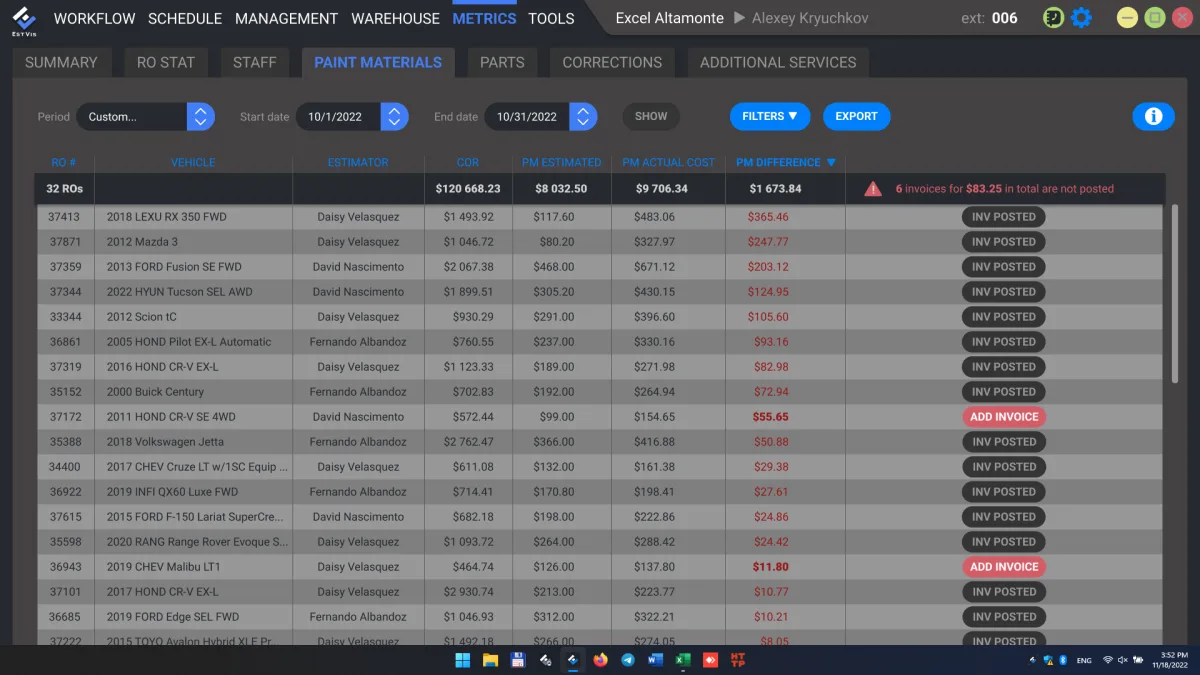
EstVis is connected to PPG®, Axalta® and BASF®, so it sees what the job actually consumed, not just what the estimate allowed. When actual consumption exceeds the estimated value, the case is flagged in Workflow and EstVis supplements for the additional paint materials, sending the invoice from the paint mixing system to the insurer. Without that invoice attached, the difference is yours to absorb.
Parts price difference
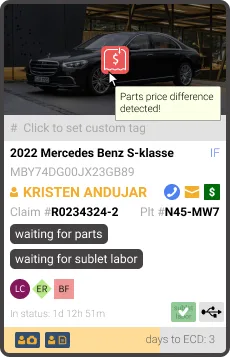
The list price in the estimating system's database and the price on the vendor's invoice are two different numbers, and the gap reaches hundreds of dollars. EstVis monitors both and warns you on the case itself, and can push the difference back to the estimating system after review.
Mechanical labor billed at the body rate
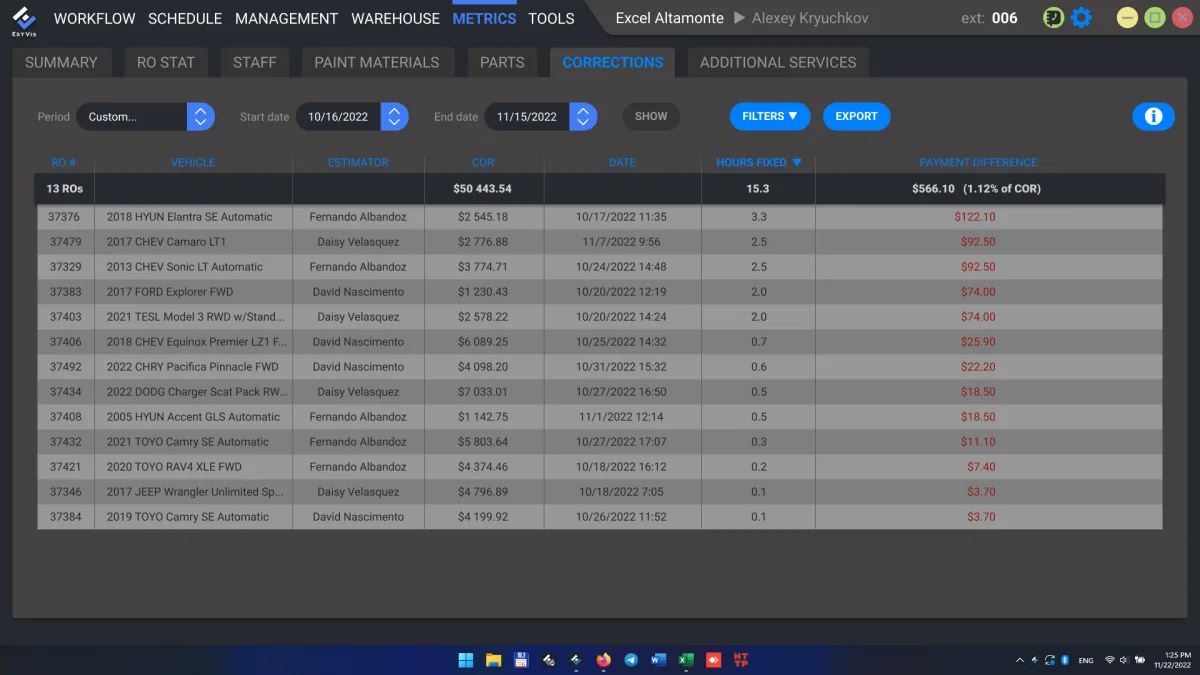
Every CCC ONE® line carries two independent attributes: a component type, the kind of part the work is on, and a labor type, the rate bucket it bills under. On an alternator, an A/C compressor, a control arm, they should agree. The estimate gets written fast, the line stays on the default body rate, and every hour on it ships to the insurer $30 to $60 below the mechanical rate.
EstVis Workflow imports new and updated workfiles continuously and checks three conditions on every line:
- The component type is mechanical, and
- The labor type is not mechanical, and
- The line has non-zero billable hours.
Matching lines are flagged and grouped by RO, with the vehicle, claim number, line description, operation, the wrong labor type and the hours at stake. Your team files the supplement in CCC ONE – EstVis surfaces what needs changing, it does not edit the estimate. Nobody has to remember to run anything: the rule is deterministic and it runs server-side. Connect CCC ONE and it immediately back-scans the jobs already in your pipeline, not only the ones that arrive next, which is why the first recovered dollar can land the same business day. In one real CCC ONE sample, 6.6 hours of mismatch turned up across 100 estimates.
Services the customer buys without a phone call
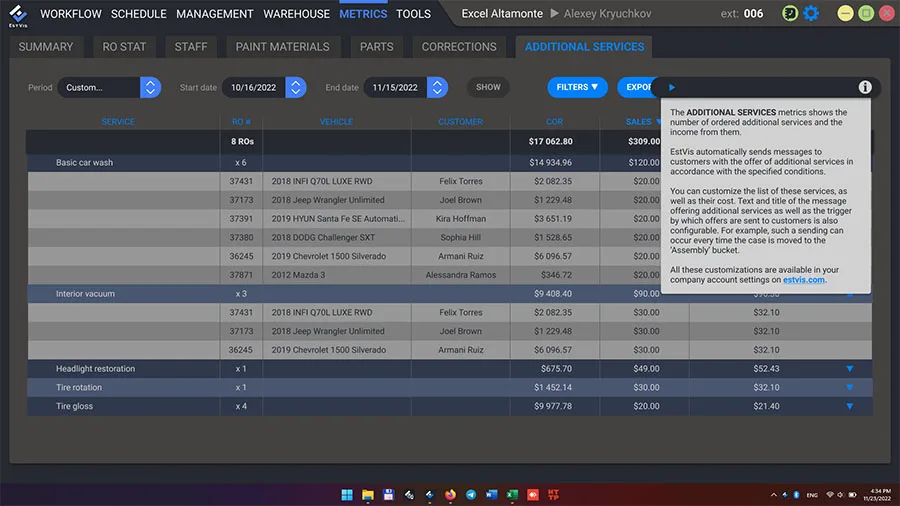
When a case reaches a bucket you choose, EstVis sends the customer your service menu – car wash, interior vacuum, headlight restoration, wheel alignment. The customer selects, signs an auto-generated PDF approval and gets a confirmation. No advisor makes the pitch.
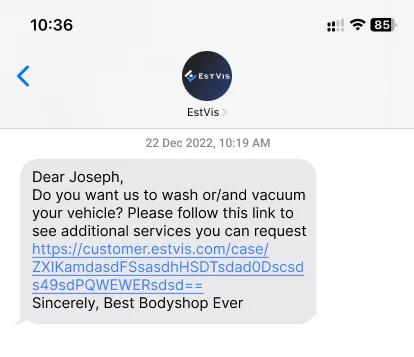
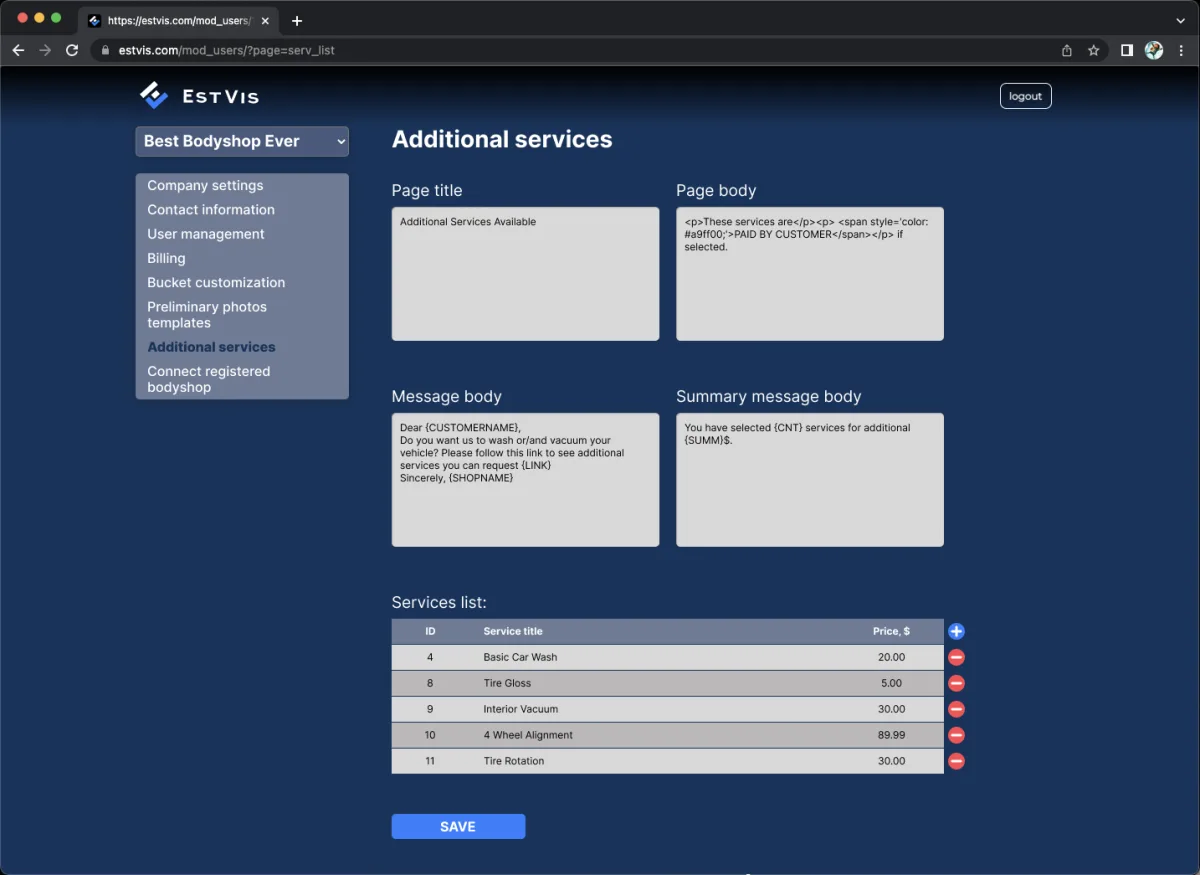
The service list, the prices, the message and the bucket that triggers it are yours to set.
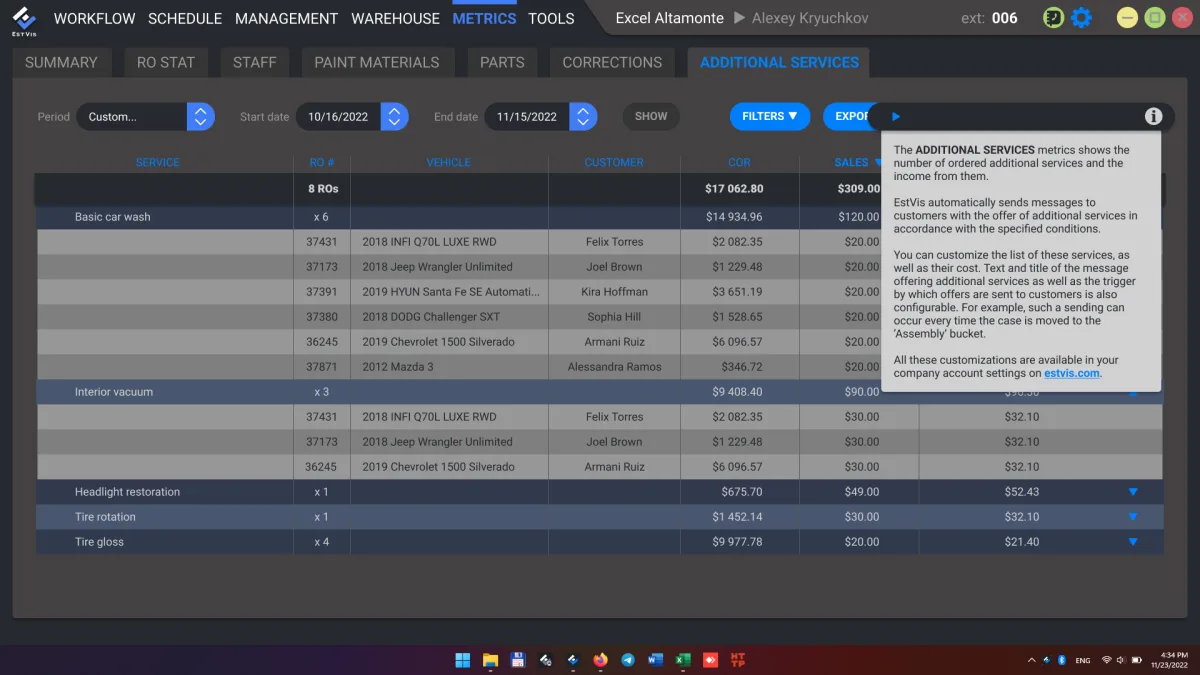
How many customers say yes is the one figure here that is modelled rather than measured: the profit recovery calculator assumes about one in five, a band inferred from service-advisor close rates and digital-inspection approval lifts, discounted because nobody is on the call making the pitch. What the feature is worth is firmer – on the order of $800 per $100,000 of repair sales.
Calls the front office never has to make
Automatic status notifications, prefilled paperless Work Authorizations, customer self-scheduling, guided photo templates for remote damage photos. Each one removes a reason to pick up the phone, in both directions, so one CSR handles more ROs.
Getting paid before pick-up
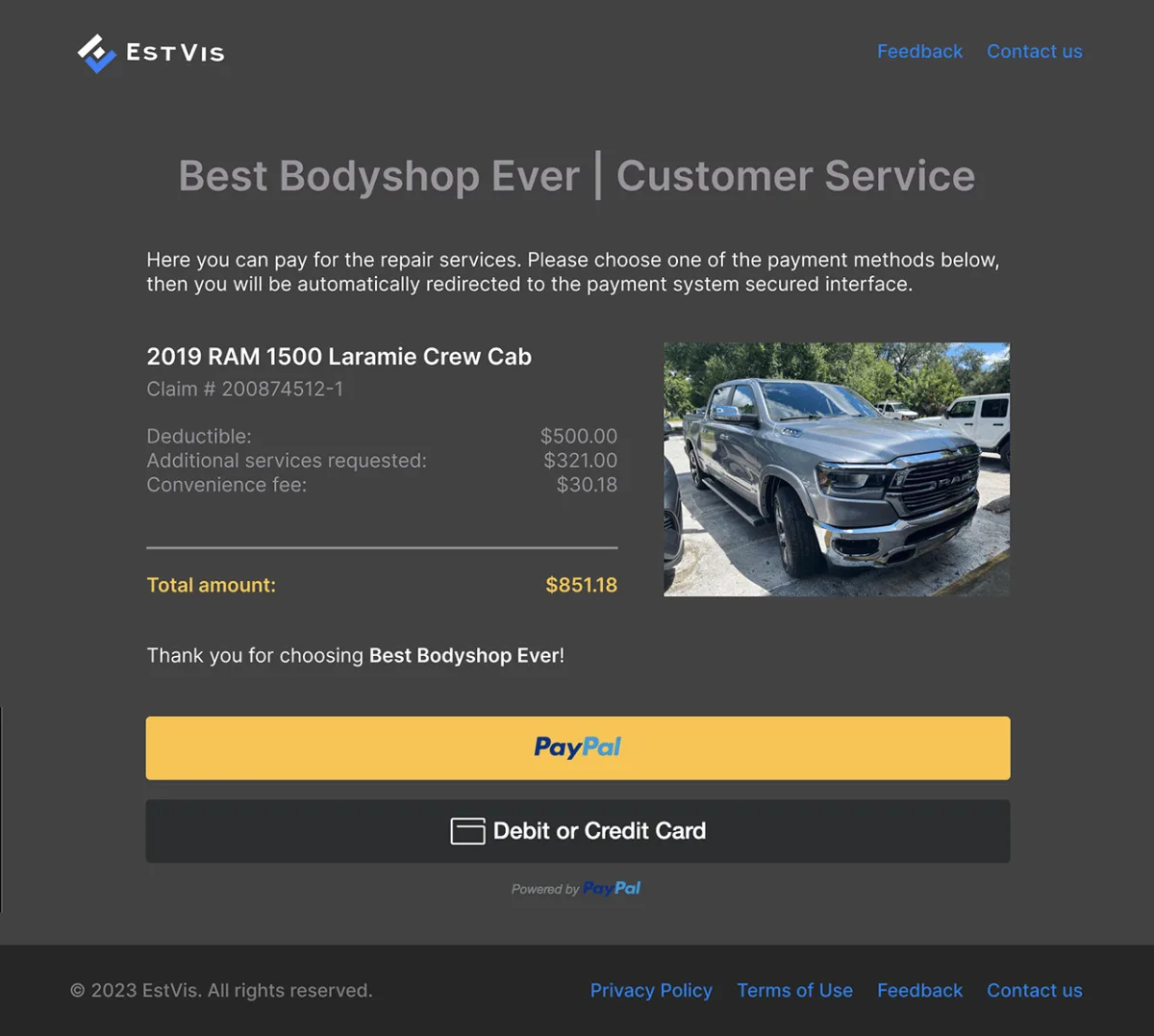
EstVis sends a PayPal® link for the deductible, the betterment and any additional services sold, including the convenience fee and sales tax where applicable. Pick-up becomes a conversation about the car, not about payment.
None of this asks your estimators or techs to work differently. To run the two largest pieces against your own RO count, use the profit recovery calculator.