
Modern Collision Repair Shops: Addressing Critical Challenges with Software Solutions
The collision repair industry has seen significant advancements in recent years, with technological innovations playing a pivotal role in improving efficiency and customer service. As modern collision repair shops grapple with a range of challenges, software solutions have emerged as indispensable tools to streamline operations, enhance customer satisfaction, and ensure compliance with evolving industry standards. In this article, we'll explore some of the most pressing issues that today's collision repair shops face and how software can provide effective solutions.
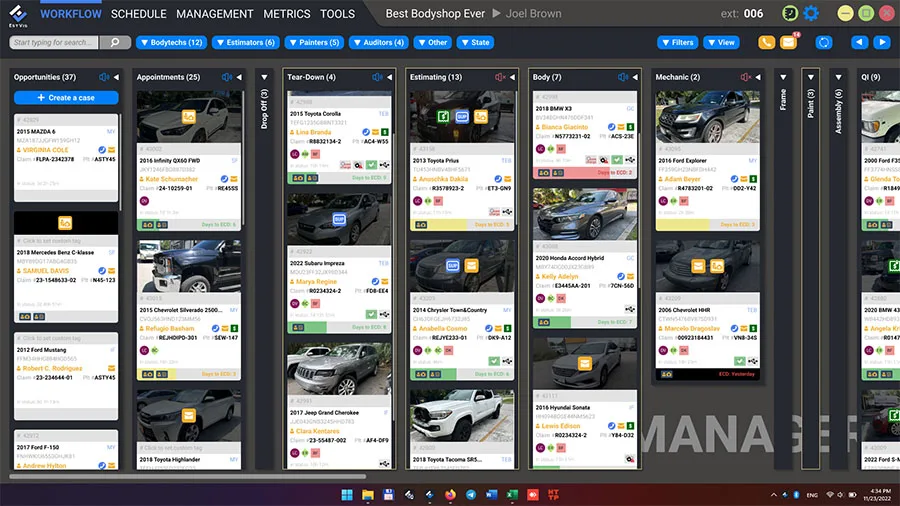
- Efficient Workflow Management: One of the foremost challenges for collision repair shops is managing the complex workflow efficiently. From scheduling and assigning tasks to tracking parts orders and labor hours, the coordination of various processes is critical. Specialized software allows shops to streamline these tasks, enabling real-time monitoring of work progress, optimizing resource allocation, and reducing bottlenecks.
- Accurate Estimations: Accurate and transparent cost estimations are vital for both repair shops and customers. Estimation software can help calculate repair costs based on parts, labor, and other factors, ensuring that customers receive fair and competitive pricing. This transparency builds trust and customer satisfaction.
- Parts and Inventory Management: Maintaining an organized and up-to-date inventory of replacement parts is crucial for collision repair shops. Software can automate inventory management, helping shops keep track of available parts, reorder when necessary, and minimize waste. This, in turn, reduces delays in the repair process.
- Customer Communication and Updates: Effective communication with customers is essential. Software solutions can facilitate instant communication by sending automated updates on the repair progress, delivery times, and estimated completion dates. This helps build trust and improves customer satisfaction.
- Compliance and Documentation: Compliance with regulations and industry standards is paramount in the collision repair business. Specialized software can assist with generating and storing essential documentation, ensuring that all required forms, certifications, and reporting are accurate and readily accessible for audits or legal purposes.
- Performance Analytics: Performance analytics software enables shops to assess key metrics such as repair cycle times, customer satisfaction ratings, and employee efficiency. By tracking and analyzing these data points, repair shops can identify areas for improvement and make informed decisions to enhance their operations.
- Data Security: In the age of digital operations, protecting sensitive customer information and proprietary data is crucial. Software solutions can include robust security features to safeguard customer and business data, reducing the risk of data breaches and maintaining trust.
- Integrating with Insurance Providers: Collision repair shops often work closely with insurance companies. Software that integrates with insurance platforms can help streamline communication, claims processing, and payments, ensuring smoother interactions with insurers and faster settlements for customers.
Conclusion
Modern collision repair shops face a host of challenges, but software solutions are proving to be invaluable in addressing these issues. From managing workflows and providing accurate estimations to improving customer communication and ensuring compliance, software has become an indispensable tool for collision repair businesses. Embracing these technological advancements not only enhances efficiency but also results in higher customer satisfaction and better business outcomes. As the collision repair industry continues to evolve, adopting software solutions will be key to staying competitive and meeting the demands of the modern market.